
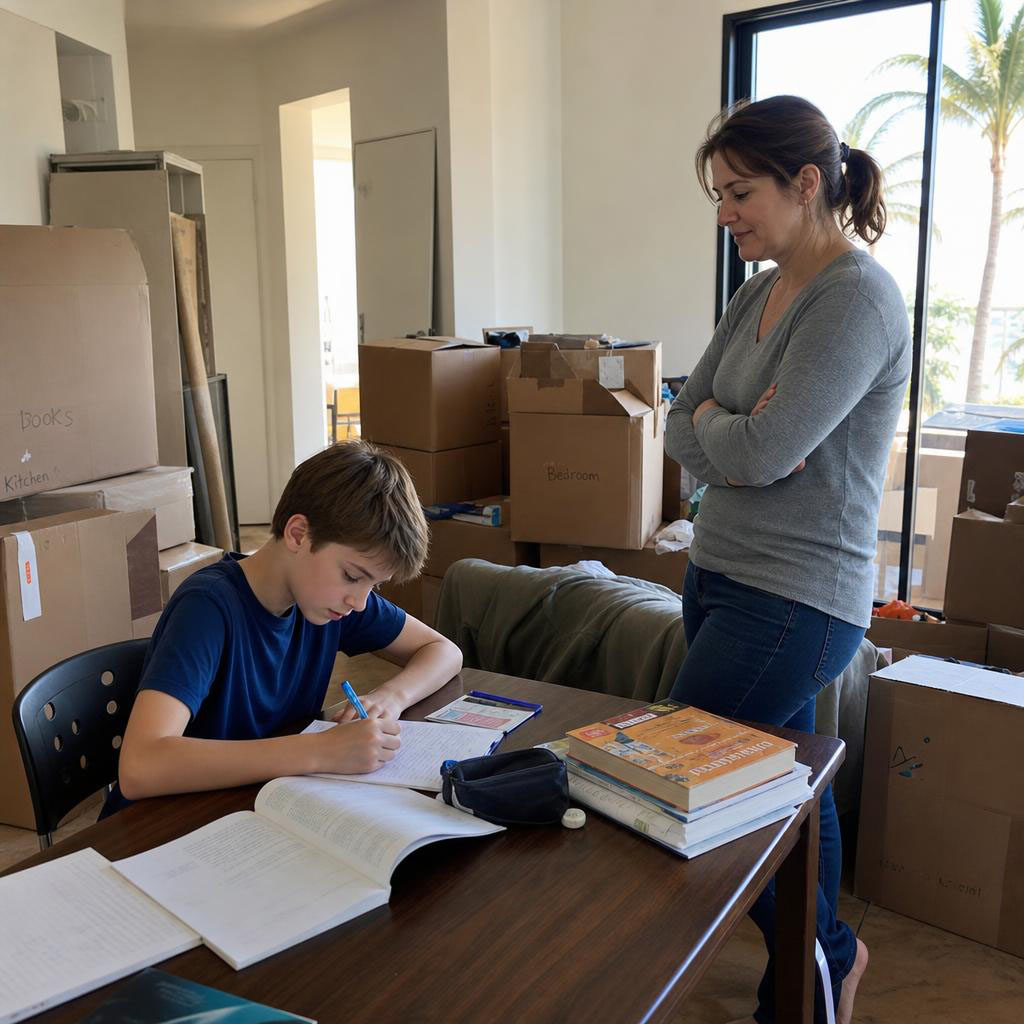
For UK families living abroad, the three main ways to keep your child on a British curriculum are: enrol in a British international school where you live, enrol in a UK-based online school that delivers the British curriculum remotely, or home educate using British curriculum resources and sit exams as a private candidate at a local British Council office or approved exam centre. The right choice depends on whether you're staying in one country for several years (where a British international school often works well) or moving frequently (where an online school or home education offers continuity), and on what's available locally. All three routes lead to the same recognised qualifications: IGCSE at 16, A Levels at 18, and direct progression to UK universities through UCAS in the standard way. Children whose education starts and ends on the British curriculum face no academic disadvantage compared to peers who stayed in the UK.
The practical questions for families abroad usually aren't about whether the British curriculum can be continued (it can) but about which delivery mode suits the family's circumstances best.
Why Families Want to Continue the British Curriculum Abroad
The reasons vary. Some families plan to return to the UK in a few years and want their child to slip back into the school system without disruption. Some plan to stay abroad long-term but expect their child to attend a UK university, where British qualifications are the most direct route. Some value the curriculum itself, particularly the depth-over-breadth approach of A Levels compared to broader systems like the International Baccalaureate or the American high school diploma. Some simply want educational continuity for a child who has already started on a British path.
The British curriculum is unusually portable for these purposes. Cambridge International and Pearson Edexcel both designed their international qualifications specifically for students outside the UK, with the same content, assessment standards, and recognition as the qualifications taken in the UK. A student studying IGCSE Biology in Singapore, Spain, or Saudi Arabia is sitting the same exam as a student in Manchester or Birmingham.
Option One: British International Schools
For families settled in one country for several years, a British international school is often the most natural choice. These schools deliver the British curriculum in a setting designed for it, with qualified British teachers, structured pastoral care, extracurricular programmes, and peer groups of children from similar educational backgrounds.
The Council of British International Schools (COBIS), which represents over 450 British international schools in 79 countries, accredits schools that meet the standards of leading UK independent schools. COBIS-accredited schools are inspected against rigorous benchmarks and provide an internationally recognised pathway from primary through to A Level. Many other British international schools operate outside the COBIS membership but follow similar curricula and accept students preparing for UK qualifications.
The advantages of a British international school are substantial: the immersive environment, the daily routine in a school setting, the social peer group, the extensive extracurricular and sporting programmes, and the support for transitions back to the UK. The drawbacks are usually cost (international school fees can range from £8,000 to over £30,000 per year depending on location) and availability (some countries have several British schools to choose from; others have none).
Families considering this route should look at COBIS membership, the school's most recent inspection report, the proportion of teachers with UK qualifications, IGCSE and A Level results, and university destinations of recent leavers.
Option Two: UK-Based Online Schools
For families who move frequently, live in countries without a British international school, or want greater flexibility, a UK-based online school can be a strong alternative. The child studies the British curriculum remotely with qualified teachers, regardless of where the family is physically based, and stays at the same school through every relocation.
The model works particularly well for families in diplomatic, military, energy sector, or international business roles where postings change every two or three years. Each move would otherwise mean a new school, new curriculum, new friends, and possibly a new academic level. An online school in the UK provides continuity through all of this; the child's school doesn't change even when everything else does.
Cost varies but typically falls between £2,000 and £8,000 per year, considerably less than most British international schools. The trade-off is the social environment: students don't have the daily peer interaction or extracurricular programme of a school building. Families using this route usually invest separately in local social activities, sports clubs, language classes, or cultural opportunities to fill that gap.
Time zones matter when comparing providers. Some online schools run their live lessons exclusively on UK time, which works for European-based families but creates awkward schedules in Asia or the Americas. Others offer multiple timetables across regions. Asking specifically about how the provider handles the family's time zone is essential before enrolling.
Option Three: Home Education with British Curriculum
A third option is more straightforward than many parents realise: home educate your child using British curriculum materials, then enter them for exams as private candidates at a British Council office or other approved centre. This works particularly well for families who want maximum flexibility, have one parent with the time and confidence to oversee learning, or are based in countries without a British school.
The legal position for UK families is straightforward. UK education law doesn't apply to children living outside the UK, so the question is what the country you're living in requires. Most countries accept home education by foreign nationals, though local registration requirements vary. The British curriculum can be followed using published textbooks, online resources, and tuition for specific subjects.
Many families combine approaches: home educate for the primary years, then enrol in an online school for the IGCSE and A Level years when the academic demands increase. The qualifications route is the same as for online school students: the family registers the child as a private candidate at a British Council office or approved exam centre, pays the exam fees, and the child sits the same exams as any other candidate. Resources for homeschooling in the UK apply broadly to families home educating abroad, although local rules about home education vary by country.
University Entry from Abroad
This is the question that keeps many expat parents awake. The reassuring answer is that students who completed the British curriculum abroad apply to UK universities on exactly the same basis as students in the UK.
UCAS treats international applicants and home-grown applicants identically in terms of process. The application form, personal statement, predicted grades, and references all work the same way. What differs is the fee category: students who haven't been resident in the UK for the three years before starting university are typically classed as "international" for fee purposes and pay higher tuition rates. This is independent of which qualifications they hold or which passport they carry.
Some children of British nationals abroad can qualify for home fee status under specific criteria, but this is the exception. Families planning a UK university route should factor international fee rates into their financial planning.
Academic admission itself isn't affected by studying abroad. A student with strong A Level grades from a British international school is in the same position as a student with the same grades from a UK school. Competitive courses including medicine, law, and Oxbridge regularly admit students who studied the British curriculum abroad.
What Doesn't Work Well
Two combinations cause real difficulty.
Mixing curricula partway through. A child who spends Years 7-9 on the International Baccalaureate Middle Years Programme and then tries to sit IGCSE exams at 16 will usually struggle, because the content coverage isn't aligned. Sequenced curricula work much better than mixed ones. If you're committed to ending on the British curriculum, start on it as early as practical.
Leaving exam preparation late. Private candidate registration with exam centres typically requires three to six months' notice. Families realising in March that they want their child to sit June exams often find the centres they need are already full. Planning at least a year ahead, ideally more, avoids this.
FAQs
Does my child need a British passport to study the British curriculum abroad?
No. The British curriculum is open to students of any nationality at British international schools, UK-based online schools, and as private candidates with exam centres. Cambridge International and Pearson Edexcel are delivered worldwide to students from every nationality. What citizenship does affect is some university fee categories in the UK and some immigration considerations if the student wants to attend university in the UK after their qualifications, but these are separate from the right to study the curriculum itself. Families of any nationality can choose the British curriculum if they think it suits their child, and many international students do for exactly this reason.
Will my child be at a disadvantage compared to peers studying in the UK?
Not academically. Students studying the British curriculum abroad sit the same IGCSE and A Level exams as students in the UK, with the same syllabuses, the same papers, and the same grading standards. University admissions tutors don't distinguish between candidates based on where they studied the curriculum. The differences are practical rather than academic: students abroad miss UK-specific cultural references in some subjects (English Literature texts, history modules focused on Britain), but these are usually choices within the syllabus rather than required elements. The advantage that students abroad often have is broader cultural exposure, which can strengthen personal statements and interview performance for competitive university courses.
What if we move from a country with a British school to one without?
This is exactly the situation an online school is designed for. Families who anticipate this kind of move often choose an online school from the start, even when a local British school is available, precisely so the child's education doesn't get disrupted when the family relocates. If you're already enrolled in a British international school and learn you're moving to a country without one, the typical transition is to enrol in a UK-based online school for the duration of the next posting. The child stays on the British curriculum, the qualifications track stays the same, and the only practical change is where exams are sat. Notify the new exam centre as soon as possible after relocating.