
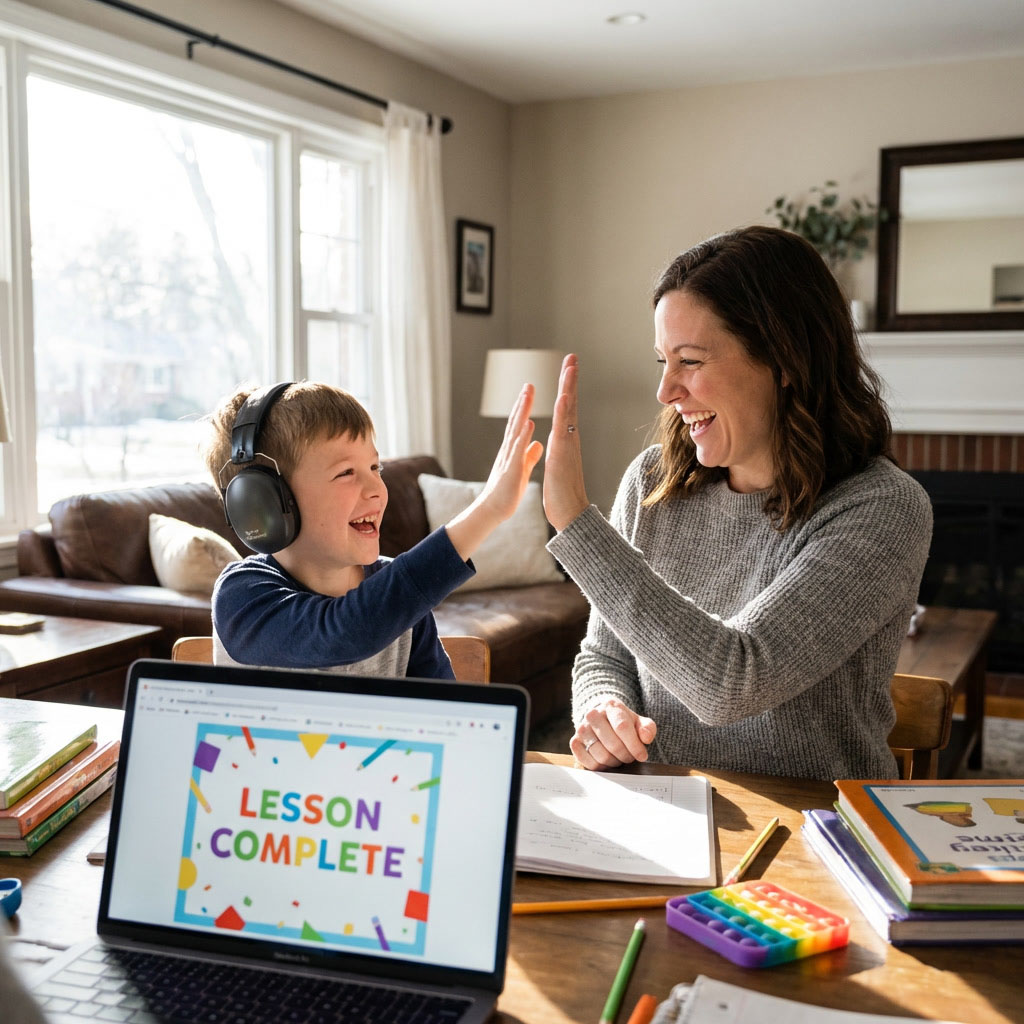
Online school for special needs students in South Africa offers flexible, self-paced learning that can be tailored to individual requirements, making it an increasingly popular choice for families of children with ADHD, dyslexia, autism spectrum disorder, and other learning differences.
Unlike traditional classrooms where instruction moves at a fixed pace for the average learner, online environments allow students to spend extra time on challenging content while progressing quickly through material that plays to their strengths. With proper accommodations and the right provider, students with special needs can achieve the same qualifications as their peers in mainstream education.
Why Online Learning Works for Special Needs Students
Traditional classroom environments present challenges that online learning can address:
Flexible pacing is perhaps the most significant advantage. In conventional classrooms, instruction moves at a pace set for the average student, leaving those who need more time feeling behind. Online learning allows students to progress at their optimal speed. A dyslexic student might spend extra time on reading-heavy units while moving quickly through content that plays to their strengths. This personalised pacing reduces frustration, builds confidence, and prevents learning gaps.
Reduced sensory overload benefits students with autism, sensory processing difficulties, or anxiety. Traditional classrooms bombard students with fluorescent lighting, background noise, crowded spaces, and constant social demands. Home-based learning allows families to control the environment, minimising distractions and creating conditions where their child can focus.
Elimination of social pressure helps students who experience anxiety about being called on to read aloud, fear of peer judgment, or bullying. The online environment removes these stressors, creating a psychologically safer space for learning. Students can participate without the performance anxiety that traditional classrooms often generate.
Customisable scheduling accommodates medical appointments, therapy sessions, medication timing, and natural energy patterns. If your child functions best in the afternoon rather than early morning, online schooling allows you to structure the day accordingly.
Individualised attention becomes more achievable when parents serve as learning coaches. You observe your child's responses, notice when they're struggling, and can adjust approaches immediately rather than waiting for teacher-parent conferences.
Types of Learning Differences Online Schools Support
Online schools in South Africa support various learning profiles:
ADHD (Attention Deficit Hyperactivity Disorder) affects focus, organisation, and impulse control. Online learning helps through shorter lesson segments, the ability to take movement breaks, reduced classroom distractions, and self-paced progression that accommodates variable attention spans.
Dyslexia affects reading, spelling, and written expression. Online platforms often offer text-to-speech features, audio lessons, and visual learning approaches that reduce reliance on reading alone. Students can replay content as needed and take extra time without peer comparison.
Autism Spectrum Disorder (ASD) involves differences in social communication, sensory processing, and flexibility. Home-based learning eliminates many social demands and sensory challenges, while predictable online routines provide the structure many autistic students need.
Dyscalculia affects mathematical understanding. Online learning allows students to revisit concepts repeatedly, use visual representations, and progress at their own pace without falling behind a class.
Dyspraxia affects motor coordination and planning. Typing instead of handwriting, reduced physical demands, and the ability to complete work without time pressure all help students with dyspraxia.
Auditory and visual processing disorders benefit from multimodal content delivery. Online platforms typically present information through multiple channels, allowing students to access content in ways that suit their processing strengths.
Anxiety and emotional difficulties often improve when students can learn in safe, familiar environments without the social pressures and unpredictability of traditional schools.
Examination Accommodations and Concessions
Students with documented learning differences can receive accommodations during formal assessments, including matric examinations. Understanding these options is crucial for planning your child's educational pathway.
Types of accommodations available through examination bodies like SACAI, IEB, and DBE include:
Extra time: Additional time is allocated per hour of examination, typically 5-20 minutes per hour depending on the severity of needs. This applies across all subjects the learner writes.
Reader: A person reads all text in the examination paper aloud to the learner. This helps students with visual impairments, dyslexia, or processing difficulties access the content.
Scribe: A scribe writes verbatim what the learner dictates, enabling oral responses. This helps students with dysgraphia, motor difficulties, or conditions affecting handwriting.
Amanuensis: Combines reader and scribe functions for students needing both accommodations.
Prompter: Refocuses easily distracted learners using verbal or physical cues. This is commonly approved for students with ADHD or autism who struggle to maintain attention during extended examinations.
Separate venue: A quiet environment away from the main examination centre, reducing sensory distractions and allowing accommodations like readers or scribes to function without disturbing other candidates.
Rest breaks: Periods when the learner can step away from the desk while remaining in the venue, helpful for students who need physical movement or time to manage anxiety.
Electronic reader/computer: Text-to-speech devices or laptops for typing responses, helpful for students with reading or writing difficulties.
Spelling concession: A sticker on the examination script indicating that spelling errors should not be penalised (provided answers can be deciphered phonetically), except in language papers where spelling is specifically assessed.
Subject exemptions: In severe cases, exemption from subjects like Afrikaans First Additional Language (for significant reading/language difficulties) or Mathematics (for dyscalculia) may be granted.
The Application Process for Accommodations
Obtaining examination accommodations requires documentation and formal applications:
Psycho-educational assessment is typically required, conducted by a registered educational psychologist. This assessment must demonstrate average or above-average intellectual ability alongside a significant learning barrier. The report should clearly state any diagnoses and show a discrepancy between cognitive potential and academic achievement.
Supporting documentation includes teachers' comments, recent school reports, schoolwork samples, and medical reports where relevant. Teachers' observations about how difficulties present in classroom settings carry significant weight.
Application timing matters significantly. The IEB and SACAI have specific deadlines, and first-time applications in Grade 12 are often not accepted. Start the process early, ideally in Grade 10 or earlier, to ensure accommodations are in place throughout the FET phase.
Each examination body has specific requirements. The IEB, SACAI, and DBE all have accommodation policies, but processes and documentation requirements differ. Work with your online school to understand which body's requirements apply and what documentation they need.
Accommodations must be used consistently. If your child receives accommodations for final examinations, they should be using equivalent accommodations during regular schoolwork and tests throughout the year. Examination bodies want to see that accommodations are genuinely needed and consistently applied, not just requested for high-stakes assessments.
Choosing an Online School for Special Needs
Not all online schools effectively support special needs learners. Evaluate these factors:
Experience with learning differences matters significantly. Ask specifically about their experience with your child's condition. How many students with similar profiles do they support? What accommodations can they provide during regular assessments?
Self-paced versus scheduled learning affects suitability. Some students with ADHD or autism need structured schedules to maintain progress. Others benefit from complete flexibility. Understand the school's model and whether it matches your child's needs.
Multimedia content helps various learning profiles. Look for schools offering video lessons, audio options, interactive activities, and visual representations rather than text-heavy content alone.
Teacher support accessibility determines how much help is available when your child struggles. Can teachers be contacted for clarification? Are there live sessions or only pre-recorded content? How responsive is support?
Accommodation integration shows whether the school genuinely understands special needs or merely accepts students without providing appropriate support. Do they help with examination accommodation applications? Can they provide untimed assessments during the school year?
Assessment flexibility during regular schoolwork matters as much as final examination accommodations. If your child needs extra time or alternative response methods, can the school provide these for routine tests and assignments?
SACAI or IEB registration determines your examination pathway. SACAI specifically caters to distance learners and has established processes for accommodations. Verify that your chosen school is registered with an appropriate examination body.
CambriLearn offers multiple curriculum pathways with self-paced learning options that can accommodate students with various learning needs, providing flexibility in how and when students engage with content.
Practical Considerations for Families
Successfully supporting a special needs learner online requires preparation:
Create an appropriate learning environment. Consider lighting (many neurodiverse students are sensitive to fluorescent or bright light), noise levels, seating options (some students need movement while learning), and visual organisation of the workspace.
Establish routines that provide structure while accommodating needs. Visual schedules, timers, and predictable patterns help many students with ADHD and autism manage their day.
Build in breaks appropriately. Students who struggle with sustained attention may work better in shorter bursts with movement breaks between sessions.
Maintain therapeutic supports. Online schooling shouldn't replace occupational therapy, speech therapy, psychological support, or other interventions your child receives. The flexibility of home-based learning should make coordinating these appointments easier.
Document everything. Keep records of assessments, reports, accommodation applications, and school correspondence. This documentation becomes essential for examination accommodation applications and any future educational transitions.
Connect with support networks. South African homeschooling groups, special needs parent communities, and organisations like the South African Association for Learning and Educational Difficulties (SAALED) provide valuable resources and connection with families in similar situations.
Curriculum Options for Special Needs Learners
Different curricula suit different learning profiles:
CAPS/NSC through SACAI or IEB is the most straightforward path to a recognised matric qualification. With appropriate accommodations, many special needs students succeed with this pathway. The structured curriculum provides clear expectations, which some students find helpful.
American High School Diploma offers flexibility that appeals to many special needs families. Self-paced progression, varied subject options, and the absence of high-stakes standardised examinations suit students who struggle with traditional assessment formats. The curriculum is often described as "neurodivergent-friendly."
Cambridge/British curriculum provides another recognised qualification with different assessment approaches. IGCSE and A-Level examinations are available with accommodations through Cambridge Assessment.
Modified or skills-focused pathways may be appropriate for students with significant intellectual disabilities. While these don't lead to standard matric qualifications, they focus on functional academics and life skills. Discuss options with educational specialists if your child's needs fall into this category.
When Online School Might Not Be the Right Choice
Online learning doesn't suit every special needs student:
Severe intellectual disabilities may require more intensive, specialised support than online platforms can provide. Special schools with trained staff and therapeutic interventions might serve these students better.
Students requiring constant supervision for safety reasons may need physical school environments with appropriate staffing.
Those who thrive on in-person social interaction and become isolated or depressed without peer contact may struggle with home-based learning despite its other advantages.
Families unable to provide learning support should consider whether online schooling is realistic. While online schools provide curriculum and teacher support, someone at home typically needs to facilitate the learning process, especially for younger students or those requiring significant structure.
Some conditions require specialist intervention that goes beyond what parents can provide. If your child needs daily access to speech therapists, occupational therapists, or behavioural specialists, a school with these resources might be more appropriate than home-based learning supplemented by occasional therapy.
Frequently Asked Questions
Can my child with special needs get a matric certificate through online schooling?
Yes, absolutely. Students with learning disabilities, ADHD, autism, and other special needs regularly complete the NSC (matric) through online schools registered with SACAI or IEB. The qualification is identical to what students receive from traditional schools. With appropriate accommodations during assessments, many special needs students achieve excellent results. The key is choosing an accredited online school, ensuring accommodations are in place early, and maintaining consistent support throughout the educational journey.
What documentation do I need for examination accommodations?
You'll need a comprehensive psycho-educational assessment conducted by a registered educational psychologist. This assessment must demonstrate at least average intellectual ability alongside a documented learning barrier that significantly impacts academic performance. The report should clearly state any diagnoses and recommend specific accommodations. You'll also need supporting documentation from teachers describing how the difficulty presents in learning situations, recent school reports, and samples of your child's work. Medical reports from relevant specialists may be required for certain conditions. Start gathering documentation early, as accommodation applications have deadlines, and first-time applications in Grade 12 are often rejected.
Is online school better than a special needs school for my child?
It depends entirely on your child's specific needs, your family's circumstances, and what's available in your area. Online school offers flexibility, personalised pacing, reduced sensory and social demands, and the ability to pursue standard qualifications with accommodations. Special needs schools offer specialist staff, therapeutic interventions, peer communities of students with similar challenges, and environments specifically designed for different learning profiles. Some families combine approaches, using online schooling for academics while accessing therapy and social activities through other channels. Consider your child's support needs, your capacity to facilitate home-based learning, and what's realistically sustainable for your family.