
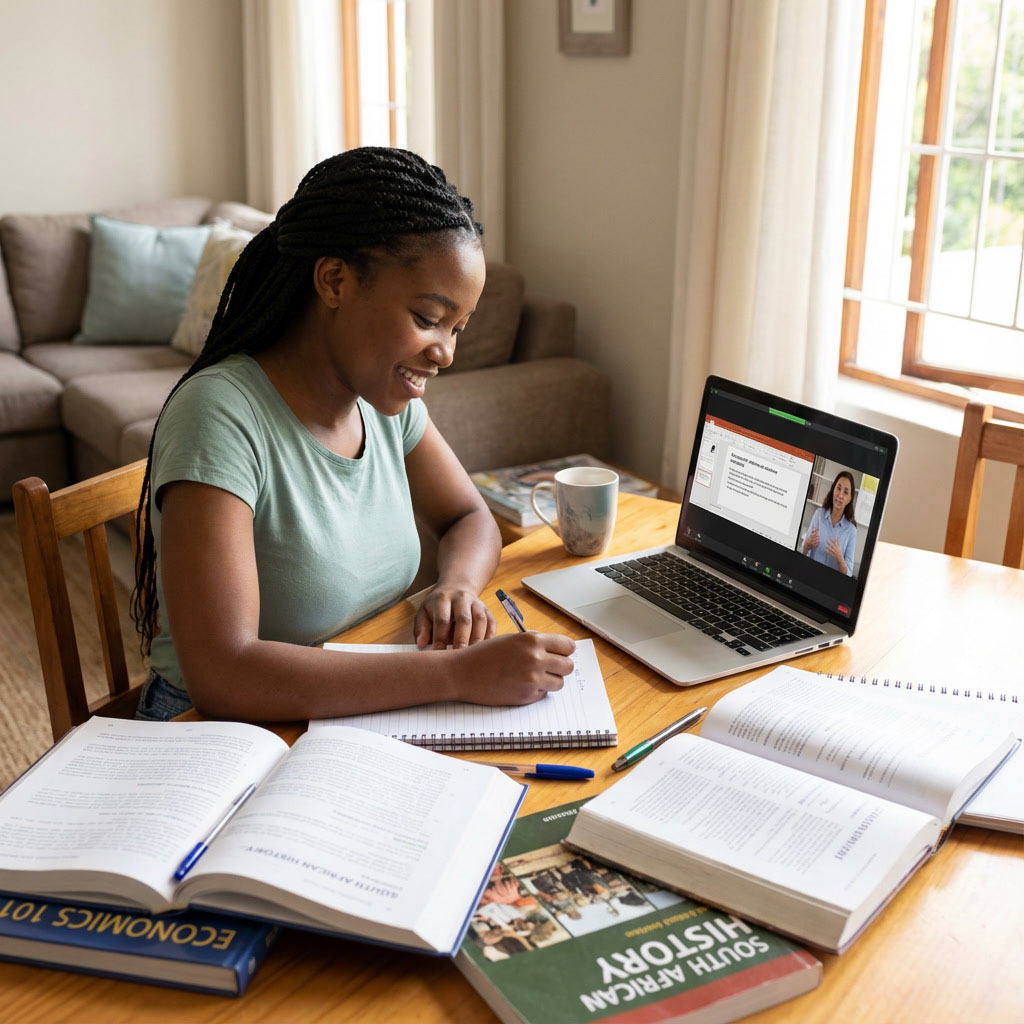
An online school in South Africa is a registered educational institution that delivers its curriculum entirely through digital platforms, allowing students to learn from home or anywhere with an internet connection.
These schools follow recognised curricula (such as CAPS, Cambridge, IEB, or international options) and provide structured lessons, assessments, and teacher support through virtual classrooms.
For families seeking flexibility, personalised pacing, or an alternative to traditional brick and mortar schools, online schooling has become a practical and increasingly popular choice.
Why More South African Families Are Choosing Online Schools
The growth of online education in South Africa reflects deeper shifts in what families need from schooling.
According to the Children's Institute at the University of Cape Town, 330,000 school-age children (ages 7 to 17) were not attending any educational institution in 2024. About 14% cited schooling costs as a barrier, while 10% reported they weren't accepted for enrolment, up from just 4% in 2022. That jump suggests capacity constraints in the traditional system are becoming a real problem. (Source: Children Count, University of Cape Town, General Household Survey 2024 analysis)
Online schools offer an alternative pathway. They also serve students whose circumstances don't fit the conventional model: young athletes, performers with demanding schedules, families who travel frequently, children with health challenges, or learners who thrive better outside a classroom environment.
There's also the geography factor. Nearly 2 million South African children travel more than 30 minutes each way to school. For rural families especially, an online school can eliminate hours of daily commuting and open doors to curricula unavailable locally.
How Online Schools in South Africa Actually Work
A quality online school provides a structured learning environment. Students receive timetables, access recorded or live lessons, complete assignments with deadlines, and sit for formal assessments. Teachers are available through scheduled video calls, messaging platforms, or dedicated office hours.
Most online schools offer one of several curriculum options. CAPS is the national curriculum required for the National Senior Certificate (NSC) matric exams. Cambridge and Pearson Edexcel are British international curricula popular with families planning for university abroad. The IEB offers another South African matric option. Some providers also offer American K-12 curricula, useful for families seeking NCAA eligibility for US university sports scholarships.
The best providers give families a choice. CambriLearn offers six different curricula, making it one of the most comprehensive options available. This flexibility means families can select the pathway matching their child's goals, whether that's local university admission, studying overseas, or pursuing athletic opportunities.
What to Look for When Choosing an Online School
Accreditation should be your starting point. Look for schools registered with SACAI if your child will write South African exams. For international curricula, check whether the school is an approved Cambridge or Pearson Edexcel centre. Cognia accreditation carries weight with US universities.
If your child has aspirations in American collegiate sport, NCAA eligibility matters. The NCAA has specific requirements for international student-athletes, and your child's school and curriculum must be approved by the NCAA Eligibility Center.
Beyond accreditation, consider practical factors. Does the school offer live lessons or only pre-recorded content? What's the teacher-to-student ratio? How are assessments handled? What does the fee structure include?
You'll also want to understand the parental involvement required. Some online schools suit independent learners who manage their own schedules. Others require a parent or learning coach to be present, particularly for younger children.
The Legal Side: What South African Law Requires
Homeschooling (including online schooling at home) is fully legal under the South African Schools Act of 1996. The Basic Education Laws Amendment (BELA) Act, signed in September 2024, maintained this while introducing clearer regulations.
If your child is between 7 and 15 years old (or hasn't completed Grade 9), you must register them for home education with your Provincial Education Department. The curriculum must meet minimum outcomes comparable to CAPS, and you'll need to maintain records and submit annual progress reports.
For Grades 10 to 12, provincial registration isn't mandatory. However, if your child wants the National Senior Certificate, they must complete schooling through an institution registered with the relevant assessment body. Reputable online schools typically help families through registration.
Frequently Asked Questions
Is online school in South Africa legally recognised?
Yes. Online schooling has been legal since 1996 under the South African Schools Act. The BELA Act of 2024 maintained this status while introducing registration requirements for compulsory school-age learners. Students at accredited online schools can write official matric exams and receive qualifications recognised by South African universities and institutions worldwide.
Can my child get into university after online school?
Absolutely. What matters for university admission is the qualification obtained, not whether they attended a physical school. Students completing matric through an accredited online school have the same pathways as any other matriculant. For international universities, Cambridge and Pearson qualifications are often preferred.
How much does online school cost in South Africa?
Fees vary depending on provider, curriculum, and support level. Some programmes start around R1,500 monthly, while comprehensive packages exceed R5,000. When comparing costs, factor in what traditional schooling actually costs: fees, uniforms, transport, and extracurriculars. For many families, online school is comparable or more affordable once everything is accounted for.