
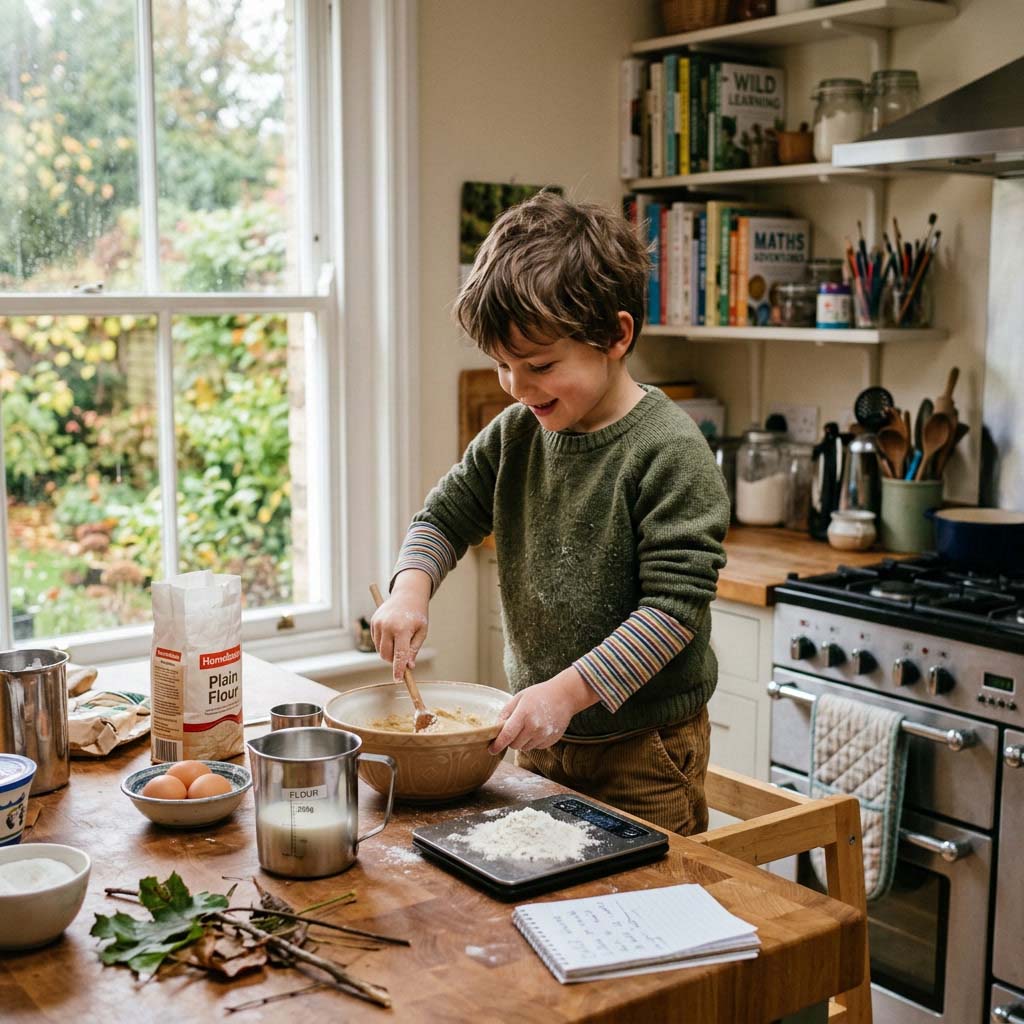
Homeschooling is legal across the UK, doesn't require permission from the government or your local authority for a child who has never been registered at a school, and gives families full freedom to choose what their child learns, when, and how. In legal terms, parents have a duty under Section 7 of the Education Act 1996 to ensure their child receives a suitable full-time education either by regular attendance at school "or otherwise," and that "otherwise" is where home education lives. Around 100,000 children are believed to be home educated in the UK at any given time, with numbers growing steadily over the past decade. Families choose this route for many reasons: their child's wellbeing, dissatisfaction with available schools, the flexibility to travel or accommodate special interests, or simply a belief that learning works better outside a classroom for their child.
The good news is the legal framework is genuinely permissive. The harder news is that with that freedom comes substantial responsibility. This guide walks through what homeschooling actually involves, what your options are, and what families should think through before deciding.
Is Homeschooling Legal in the UK?
Yes. In England, parents have the legal right to educate their child at home under Section 7 of the Education Act 1996. Equivalent provisions exist in Scotland, Wales, and Northern Ireland, with some procedural variations between the four nations.
Parents do not need permission to home educate. They don't need teaching qualifications, don't have to follow the National Curriculum, and don't have to teach during school hours or follow school terms. They are required to provide an education suitable to their child's age, ability, aptitude, and any special educational needs the child has.
If a child has never been registered at a school, parents can simply begin homeschooling. If the child is currently at a registered state school, the parent must formally notify the school in writing of the decision to home educate (this is called deregistration), and the school then removes the child from the roll. Private schools work slightly differently; parents notify the school but the procedure isn't governed by the same regulations.
Local authorities have a duty to identify children who aren't receiving a suitable education, which means they sometimes ask home-educating families for information about what they're doing. They can't legally insist on visits or follow a particular curriculum, but they can take action if they have genuine grounds to believe an education isn't being provided.
Education Otherwise, the UK's longest-established home education charity (founded in 1976), offers free guidance for new home-educating families, including fact sheets on the law in each of the four UK nations and templates for communicating with local authorities. An hour with their materials clears up the majority of legal questions.
Why Families Choose Homeschooling
Reasons vary widely, and most families have several at once. Some children have struggled with anxiety, bullying, or sensory difficulties in a school environment, and homeschooling offers a route out without losing access to education. Some families value the freedom to follow their child's interests deeply rather than skim across many subjects. Some live abroad, travel frequently for work or sport, or have routines that don't fit a 9-to-3 school day. Some have philosophical or religious convictions that don't sit well with the local school options. Some are simply unimpressed with the schools available to them.
Families who choose homeschooling aren't necessarily critical of schools, and families who choose schools aren't necessarily critical of homeschooling. They're different routes that suit different children at different times, and many families move between them over the course of their child's school years.
What Homeschooling Actually Looks Like
There's no single homeschool model. Some families recreate a school at home, with a timetable, set subjects, formal lessons, and grading. Others follow what's sometimes called "unschooling," letting the child's interests drive the daily structure with parents providing resources and conversation as needed. Most families sit somewhere in between, with a loose structure that varies by week.
For families wanting more guidance, several practical routes exist. Some use a structured online curriculum, where lessons are pre-recorded and the family works through them at their own pace. Some enrol in an online school that delivers the full curriculum remotely with live lessons and qualified teachers, which is often where families land when they want home-based learning with the structure and credentials of a traditional school. Some hire private tutors for specific subjects. Some join local home education groups for socialising, sports, and group projects. Many combine several of these approaches.
The freedom to mix and match is real. A family might use an online school for maths, science, and English, follow the child's interests for history and geography, attend a local home ed group, and use textbooks for languages. There's no rule against any combination, and many homeschooling families in the UK end up shifting their approach as their child gets older.
Qualifications and University Access
This is one of the questions parents worry about most, and the answer is more straightforward than it might seem. Home-educated children can sit IGCSE and A Level exams as private candidates, earning the same recognised qualifications as schooled children. The exam boards (Cambridge International and Pearson Edexcel are the two most common for home-educated candidates) allow private candidate entry, and exam centres exist across the UK at British Council offices, registered schools, and approved venues.
Universities accept applications from home-educated students on exactly the same basis as schooled applicants. UCAS allows home-educated applicants to register, and admissions tutors look at the qualifications, predicted grades, personal statement, and any required admissions tests. References can come from a tutor, an online school, a home education organisation, or someone else who knows the student's academic work well. Competitive courses including medicine and Oxbridge regularly admit home-educated students.
The practical implication is that families don't have to choose between freedom now and future options. A well-planned homeschool can leave every university door open.
Costs of Homeschooling
Homeschooling in the UK is unfunded by the state. Families bear the cost themselves, and the total varies enormously depending on the approach.
A family doing low-cost homeschooling using free library resources, free online materials, and group activities might spend a few hundred pounds a year on materials, exam fees when the time comes, and the occasional trip. A family using an online A Level programme or an online school with live lessons typically pays £2,000 to £8,000 a year. A family using private tutors for several subjects might pay considerably more.
Exam fees sit outside curriculum costs. Each IGCSE or A Level typically costs £100-£200 to sit at an exam centre, plus a venue fee that varies by location. Most families budget £1,500-£3,000 for exam costs across a full IGCSE or A Level series.
The hidden cost is parental time. One parent typically reduces working hours to manage the day, and that opportunity cost is often the biggest financial factor. Some families share the load between parents; some use online schools precisely to allow both parents to keep working.
Is Homeschooling Right for Your Family?
A few questions worth asking honestly. Can one adult be present and available during the day, even if not actively teaching? Does your child work well independently, or do they need close support? Are you comfortable being the one who sets pace and standards, or would you prefer that responsibility sit with a school? Can the family afford either the time cost or the curriculum cost of the approach you'd choose?
Homeschooling works brilliantly for many children and is genuinely difficult for others. Children who depend on the social rhythm of a classroom for motivation, or who do better with a clear authority figure outside the family, often thrive in school in ways they wouldn't at home. Children who concentrate better away from large groups, who get bored at the pace of a class, or who have specific needs the local schools struggle to meet often do better at home. There's no single right answer.
FAQs
Do I need to tell anyone if I want to homeschool my child?
It depends on whether your child is currently registered at a school. If they are at a state school, you must formally notify the school in writing of your decision to home educate, which triggers the deregistration process. The school will then remove your child from the roll and notify the local authority. If your child has never been registered at a school, you don't need to notify anyone in advance, although in practice your local authority may become aware and contact you. Private schools have their own procedures that aren't governed by the same regulations. In Scotland, additional steps apply if the child has been attending a council school. Equivalent provisions in Wales and Northern Ireland involve broadly similar notification processes. It's worth checking the specific rules where you live before you start.
Do home-educated children miss out socially?
Less than people often assume, but it depends entirely on what the family does. Home-educated children don't have a built-in group of 30 peers, which is a real difference from school. What they often have instead is a wider range of social contacts: home education groups (most areas have several active ones), sports clubs, drama groups, volunteer work, religious communities, family friends, online communities, and time with adults of various ages. Many home-educated children have stronger social skills with people outside their age range than schooled peers, precisely because they spend more time in mixed-age contexts. Families do need to be intentional about building social opportunities, particularly during the early teens when friendships matter most.
Can I homeschool one child while my other children attend school?
Yes, this is completely allowed and is more common than parents often realise. There's no rule that requires consistency across siblings, and families regularly find that home education suits one child while school suits another. Different children have different needs at different ages. Practically, it can be logistically demanding: drop-offs and pickups for the schooled children, plus structured time at home for the home-educated child, plus the social and emotional management of explaining why arrangements differ. Many families make this work well, but it's worth thinking through the practical day before committing. Some families find it easier to home educate all children together; others find that one-on-one time at home with the home-educated child is actually one of the benefits of the arrangement.