Cognia accreditation badge
Multi-Curriculum Online School
Cognia · Pearson Edexcel · Cambridge · NCAA Approved

Homeschooling in Saudi Arabia

Saudi Arabia does not run a formal home-education registration system like the UK or the US. For expatriate families, the established route is an accredited international online school: your child learns from home through live timetabled lessons with qualified teachers, then sits Cambridge or Pearson Edexcel exams as a private candidate at British Council centres in Riyadh, Jeddah and Al Khobar. For Saudi nationals, the Ministry of Education runs its own home study route within the national system. This guide covers the legal position, the routes available, curriculum options, exam centres, university recognition and costs.

6
curriculum
pathways
98%
university
acceptance
80,000+
students
educated
20
years
established
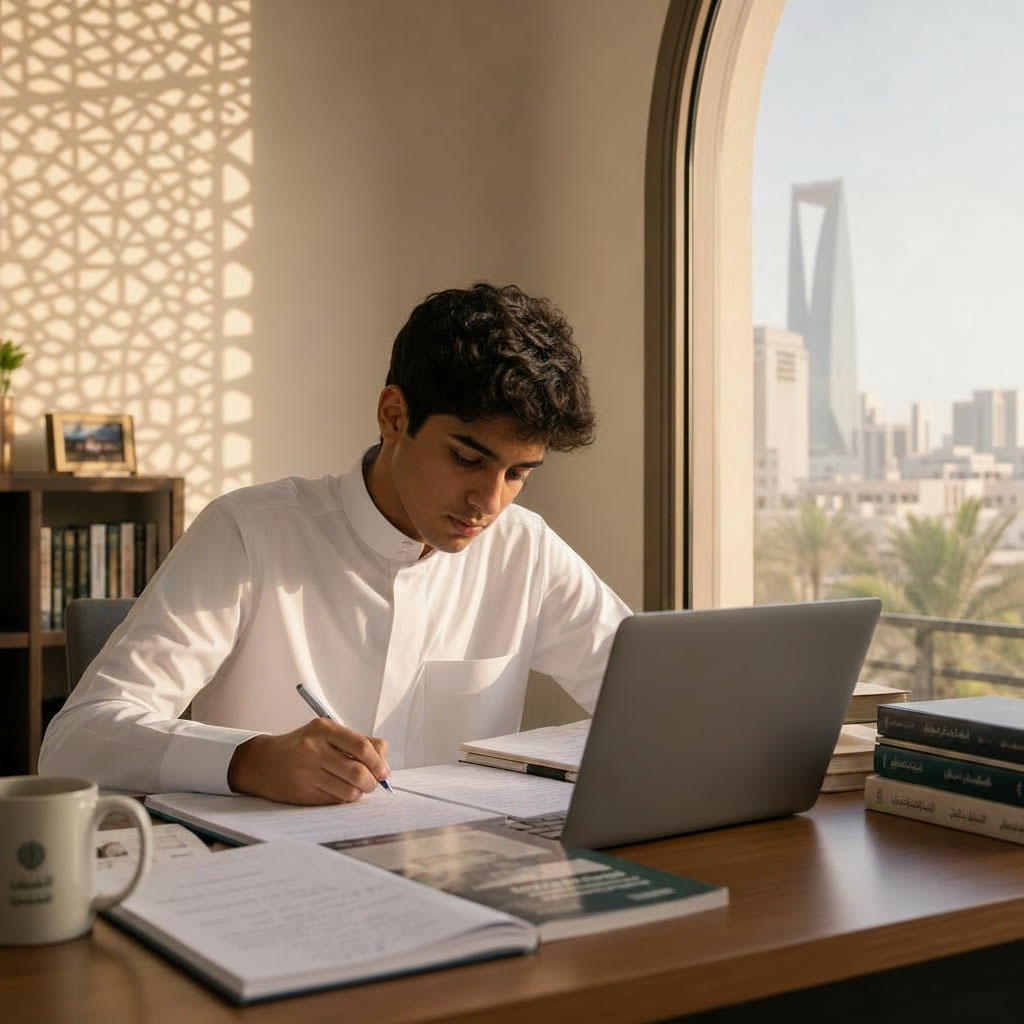
Child learning at home in Saudi Arabia
Legal status

Is homeschooling legal in Saudi Arabia?

Saudi Arabia does not operate a formal home-education registration system comparable to the UK or the US. Primary education is compulsory, and enrolment in the national school system is closely tracked. What a family can do depends on whether they are expatriate residents or Saudi nationals.

Expatriate families

Expatriate residents are not required to place their children in the Saudi national school system. Families are free to educate their children through an accredited international online school, follow a recognised international curriculum, and enter their children for international examinations at registered centres in the Kingdom. This is the route most expat families choose, and the one CambriLearn serves. No licence or approval from the Ministry of Education or ETEC is needed to enrol a child with an accredited school based outside Saudi Arabia.

Saudi nationals

For Saudi citizens, enrolment in the national education system is the norm, and school records are linked to national systems. The Ministry of Education runs a home study and affiliated-student route (intisab) within the national system, where a student follows the Saudi curriculum and sits Ministry examinations as an external candidate rather than attending classes each day. This route leads to the national certificate and is separate from following an international curriculum. Saudi families who want an international curriculum for their child should confirm the current position directly with the Ministry of Education.

Who regulates what

The Ministry of Education regulates schools operating inside Saudi Arabia. The Education and Training Evaluation Commission (ETEC), through its National Center for Assessment (Qiyas), oversees national assessment, university admission testing and the equivalency of foreign qualifications. These bodies govern physical schools inside the Kingdom and the national examination system. They do not license international online schools based abroad, which is why expat families can use an accredited overseas provider without seeking local approval.

No local school licence is required to enrol with CambriLearn. CambriLearn is an internationally accredited school based outside Saudi Arabia. It holds Cognia accreditation and accredited Pearson Edexcel examination centre status (Centre No. 94888). Enrolling your child does not require approval from the Ministry of Education or ETEC. Families planning to apply to a Saudi university later should read the university section below, which explains the Ministry equivalency process.

Three routes

How does homeschooling work in Saudi Arabia?

There are three practical routes. The right one depends on nationality, the qualification you want your child to hold, and where you expect them to go to university.

1. Accredited international online school

The route most expat families take. You enrol your child with an accredited online school that teaches an international curriculum through live timetabled lessons with qualified specialist teachers. Your child studies from home and sits examinations at registered centres in the Kingdom. CambriLearn students in Saudi Arabia sit International GCSE, AS Level and A Level examinations as private candidates at British Council centres, or earn a Cognia-accredited US high school diploma. No local registration is required for this route.

2. National home study route (intisab)

The Ministry of Education provides a home study and affiliated-student route within the national system. A student follows the Saudi curriculum in Arabic and sits Ministry examinations as an external candidate. Successful completion leads to the Saudi General Secondary Certificate. This route suits families who specifically want the national qualification. Registration and current conditions are handled through the Ministry of Education.

3. In-person international school

Families who want a campus can enrol at one of the international day schools in Riyadh, Jeddah, Al Khobar and other cities. These schools teach British, American or IB curricula and issue the same qualifications, at a considerably higher cost. Some families combine an accredited online school with tutoring or local activity groups to keep a campus-style structure without the campus price.

Where students sit exams. The British Council runs examination centres in Riyadh, Jeddah and Al Khobar, and accepts private candidates for both Cambridge and Pearson Edexcel school examinations. Registration is completed online through the School Registration System ahead of each session. Cambridge sessions run in May/June and October/November; Pearson Edexcel adds a January session. Fees are billed in Saudi Riyals and paid directly to the British Council. See the exam centres page for details.

Curriculum options

Which curricula can homeschooled students follow in Saudi Arabia?

Families in Saudi Arabia can access every major international curriculum. The table covers the main options available through CambriLearn.

CurriculumQualificationExam BodySaudi University AdmissionInternational RecognitionVia CambriLearn
International British*International GCSE, AS & A LevelCambridge AssessmentAccepted via MoE equivalency160+ countriesYes, private candidate exams
Pearson EdexcelInt. GCSE, Int. A LevelPearsonAccepted via MoE equivalency80+ countriesYes, accredited centre (No. 94888)
US K-12US High School DiplomaCogniaAccepted via MoE equivalencyUS, NCAA approvedYes, Cognia accredited
National (MoE)Saudi General Secondary CertificateMinistry of EducationDirect admissionGCC regionNo

Where do Saudi homeschool students sit exams? CambriLearn students in Saudi Arabia sit International British Curriculum and Pearson Edexcel examinations as private candidates at British Council centres in Riyadh, Jeddah and Al Khobar. US curriculum students earn their diploma through CambriLearn's Cognia-accredited programme without a separate exam sitting. For centre details, see the exam centres page.

The International British Curriculum is the most common choice for expatriate families in Saudi Arabia. International GCSEs and A Levels are recognised in 160+ countries and, for families staying in the Kingdom, accepted for Saudi university entry once the Ministry of Education has granted certificate equivalency. The university section below explains how that works.

What it costs

How much does homeschooling cost in Saudi Arabia?

International school fees are among the largest household costs for expat families in Saudi Arabia. A British curriculum day school in Riyadh or Jeddah typically charges between SAR 60,000 and SAR 140,000 per year (roughly USD 16,000 to USD 37,000), with sixth form and premium schools higher again. Registration adds SAR 10,000 to SAR 20,000 or more, and examination fees, transport, uniforms and activities sit on top. Value Added Tax of 15% applies, though Saudi nationals are exempt on tuition.

Online homeschooling through an accredited international provider costs a fraction of a campus school. Your child follows the same International British Curriculum, sits the same Cambridge or Edexcel examinations at the same British Council centres, and earns the same qualifications. The difference is the delivery and the price.

Riyadh British curriculum school

Around SAR 60,000-101,000+/yr across year groups, rising for sixth form. Before registration, exam fees, transport and activities.

Jeddah British curriculum school

SAR 90,000-140,000+/yr for senior years. Among the highest international school fees in the Kingdom, before extras.

CambriLearn online school

International curricula priced in USD. Three package tiers. No transport, uniform or campus fees. View pricing.

Exam fees are separate. Private candidates in Saudi Arabia register and pay directly with the British Council, per subject and per session, billed in Saudi Riyals. US diploma students do not sit a separate external examination. Full CambriLearn fee schedules for every curriculum and grade are on the pricing page.

University pathways

Can homeschooled students in Saudi Arabia go to university?

Yes. Universities admit students on the qualification they hold, not the setting they studied in. What matters is that the qualification comes from an accredited school and is recognised where the student applies. Because CambriLearn is an accredited school issuing externally examined, internationally recognised qualifications, students hold a school-issued certificate rather than an informal home record, which strengthens both overseas and Saudi university applications.

Universities abroad

This is the route most expatriate families plan for. A Levels and International GCSEs are accepted by every UK university through UCAS and carry the same tariff as domestic A Levels. They are recognised across the US, Canada, Australia, Europe and 160+ countries. A Cognia-accredited US high school diploma is accepted by American universities and, for student athletes, meets NCAA eligibility.

Saudi universities

To use an international qualification for entry to a Saudi university, the secondary certificate is equated by the Ministry of Education through its equivalency (muadala) service. The Ministry grants equivalency where the awarding school is accredited in its home country and the certificate is recognised by universities there, which is the case for Cambridge, Pearson Edexcel and Cognia qualifications. Saudi public universities also require ETEC/Qiyas scores: the General Aptitude Test (Qudurat) for all applicants and, for science tracks, the Achievement Test (Tahsili). Both are available in English and Arabic. Each university then decides admission on a weighted percentage combining the secondary result with these test scores.

One point to confirm

Admission rules vary by institution, and some Saudi universities apply specific conditions to applicants who did not follow the national school route. Families targeting a particular Saudi university should confirm that institution's criteria, and the equivalency requirements, with the Ministry of Education before enrolling. An accredited, externally examined qualification puts a student in the strongest position, which is one reason the accredited online school route is preferred over informal parent-led study.

CambriLearn graduates

CambriLearn graduates hold a 98% university acceptance rate across UK, US, European, Gulf and South African institutions, with over $25 million in scholarships earned to date. Graduates have been accepted at universities including Oxford, Cambridge, Harvard, Stanford and the University of Cape Town.

Common questions about homeschooling in Saudi Arabia

Is homeschooling legal in Saudi Arabia?
Saudi Arabia does not run a formal home-education registration system like the UK or the US, and primary education is compulsory. In practice, expatriate residents are not bound to the national school system and are free to educate their children through an accredited international online school and sit international examinations at registered centres. Saudi nationals follow the national system, which includes a Ministry of Education home study and affiliated-student route (intisab) for the national certificate. Saudi families who want an international curriculum should confirm the current position with the Ministry of Education.
Do I need Ministry of Education approval to homeschool as an expat?
No. Expatriate families do not need approval from the Ministry of Education or ETEC to enrol their child with an accredited international online school based outside Saudi Arabia. These authorities regulate physical schools operating inside the Kingdom and the national examination system; they do not license overseas online schools. CambriLearn holds Cognia accreditation and accredited Pearson Edexcel examination centre status (Centre No. 94888).
Can my child sit International GCSEs and A Levels in Saudi Arabia?
Yes. The British Council operates examination centres in Riyadh, Jeddah and Al Khobar, and accepts private candidates for both Cambridge and Pearson Edexcel school examinations. Registration is completed online through the School Registration System ahead of each session. Cambridge sessions run in May/June and October/November, and Pearson Edexcel adds a January session. CambriLearn prepares students for these examinations and holds accredited centre status for Pearson Edexcel.
Will Saudi universities accept an international online school qualification?
Yes, through the Ministry of Education equivalency (muadala) process. The Ministry grants equivalency where the awarding school is accredited in its home country and the certificate is recognised by universities there, which applies to Cambridge, Pearson Edexcel and Cognia qualifications. Saudi public universities also require ETEC/Qiyas scores, the General Aptitude Test (Qudurat) and, for science tracks, the Achievement Test (Tahsili). Admission rules vary by institution, and some universities apply specific conditions to applicants who did not follow the national school route, so families targeting a particular Saudi university should confirm its criteria in advance.
Is online school cheaper than international school in Saudi Arabia?
For most families, yes. A British curriculum day school in Riyadh or Jeddah typically charges between SAR 60,000 and SAR 140,000 per year before registration, exam fees, transport, uniforms and activities. An accredited online school delivers the same International British Curriculum and leads to the same qualifications at a fraction of that cost. Families with more than one child see the biggest difference. CambriLearn's pricing page has full details.
What is the intisab (national home study) route?
Intisab is the Ministry of Education's home study and affiliated-student route within the national system. The student follows the Saudi curriculum in Arabic and sits Ministry examinations as an external candidate rather than attending classes each day, leading to the Saudi General Secondary Certificate. It is separate from following an international curriculum through an online school, and it is the route for families who specifically want the national qualification. Registration and current conditions are handled through the Ministry of Education.
Can Saudi nationals use an international online school?
Saudi citizens follow the national education system, and school records are linked to national systems. Some Saudi families use an international curriculum alongside the national pathways, but the national certificate and the international route are treated separately. Because the position for citizens differs from that for expatriate residents, Saudi families should confirm current requirements with the Ministry of Education before choosing an international-only route.
Do I need teaching qualifications to homeschool in Saudi Arabia?
No. There is no requirement for parents to hold teaching qualifications. When you enrol with an accredited online school, qualified specialist teachers handle the instruction, marking and assessment through live timetabled lessons. Your role is supervision and support at home.
What about socialisation for homeschooled children in Saudi Arabia?
Saudi Arabia has a growing home education community, particularly in Riyadh, Jeddah and the Eastern Province. Families connect through sports clubs, activity centres, community groups and online communities. CambriLearn runs CambriCommunity for peer connection through group activities, clubs and events, so students studying from home still build friendships and take part in shared learning.
Can student athletes homeschool in Saudi Arabia?
Yes. Saudi Arabia's sports academies produce competitive young athletes who need an education that fits around intensive training. A structured online timetable lets students study in the mornings and train in the afternoons. CambriLearn's US K-12 pathway is NCAA approved, which means student athletes can qualify for Division I and II athletic scholarships at American universities.

Education that goes
where you go.

Six accredited curricula. 100+ countries. Live specialist teachers. 20 years of online education. 80,000+ students educated worldwide.

Free consultation · No obligation · Response within 24 hours

*CambriLearn is not a registered Cambridge school and is not affiliated with or endorsed by Cambridge University or Cambridge University Press. "International British Curriculum" refers to the curriculum framework delivered by CambriLearn, which prepares students to sit examinations administered by Cambridge Assessment International Education at independently registered examination centres as private candidates. CambriLearn is accredited by Cognia and is an accredited Pearson Edexcel examination centre (Centre No. 94888). CambriLearn is not regulated by the Saudi Ministry of Education or ETEC and is not a school registered in Saudi Arabia. Homeschooling and home study regulations in Saudi Arabia apply differently to Saudi citizens and expatriate residents; families should confirm current requirements with the Ministry of Education. For university entry in Saudi Arabia, certificate equivalency and admission criteria should be confirmed with the Ministry of Education and the individual institution. Information on this page is accurate as of July 2026.