Cognia accreditation badge
Multi-Curriculum Online School
Cognia · Approved Pearson Edexcel Centre · NCAA Approved

Homeschooling
in Egypt

Egypt does not have a homeschooling law in the sense used in the UK or the United States, but families do have legal ways to educate a child from home. Basic education is compulsory under the Constitution, and a child of school age must be enrolled against a recognised school. In practice, two routes are used: the national manazel (منازل, "at home") system, and enrolment with an international school or an accredited international online school following a foreign curriculum. This guide explains the law, the two routes, the curricula that lead to Egyptian and international universities, and the costs.

6
curriculum
pathways
98%
university
acceptance
80,000+
students
educated
20+
years
established
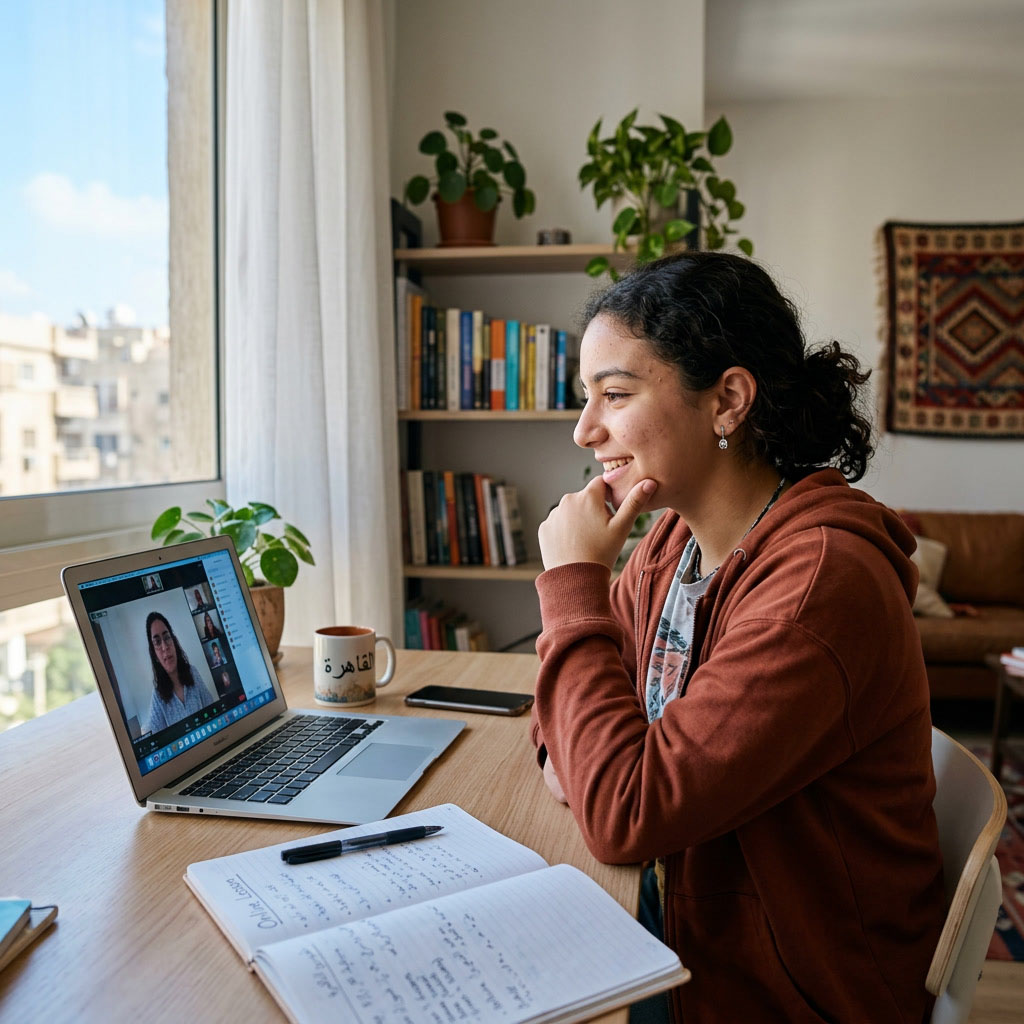
Student learning at home in Egypt
Legal status

Is homeschooling legal in Egypt?

Homeschooling, in the sense of a parent educating a child entirely outside a registered school, is not formally recognised in Egyptian law. Basic education is compulsory, and a child of school age must be enrolled against a recognised school. Families who want their children to learn from home use one of two legal routes: the national manazel (home study) system, or enrolment with an international school or an accredited international online school following a foreign curriculum.

What the law requires

Article 19 of the 2014 Constitution states that education is compulsory until the end of the secondary stage or its equivalent, and that the state provides free education in its own institutions. Egypt's main pre-university education law, Law No. 23 of 1999, sets nine years of compulsory basic education: a six-year primary stage and a three-year preparatory stage, followed by three years of secondary school that ends in the Thanaweya Amma (General Secondary Certificate). Because attendance is compulsory, a parent who keeps a child of school age out of any registered school can face a fine. The practical effect is that home learning in Egypt is arranged through a recognised school or provider rather than fully independently.

Route one: the manazel (home study) system

The manazel route sits inside the national system. A child is registered against a school but studies from home and sits the official national examinations, up to and including the Thanaweya Amma. It follows the Arabic-language national curriculum and leads to the national certificate. The rules, including eligibility and age conditions, are set by the Ministry of Education and are periodically revised, so families choosing this route should confirm the current requirements with their local educational administration (idara). CambriLearn does not deliver the Egyptian national curriculum or prepare students for the Thanaweya Amma, so the manazel route is outside what CambriLearn offers.

Route two: an international curriculum from home

Most families who ask about homeschooling in Egypt are looking for an international curriculum. Egypt has one of the largest international-school sectors in the region, and foreign systems, British, American, French, German and the International Baccalaureate, are widely available and supervised by the Ministry of Education as a distinct category of provision. A family can enrol a child with an international school or with an accredited international online school such as CambriLearn, follow a recognised international curriculum, and sit examinations as private candidates at recognised centres. University entry in Egypt then runs through the Ministry's equivalency process, which is covered further down this page.

Where CambriLearn fits. CambriLearn is an internationally accredited online school delivering the International British Curriculum, Pearson Edexcel and US K-12 pathways. It is not registered with or accredited by the Egyptian Ministry of Education and does not deliver the Egyptian national curriculum. Families remain responsible for meeting Egypt's enrolment obligations and for the university equivalency process.

The legal position is nuanced and enforcement varies. Egyptian education law is being reformed, and the practical treatment of home learning differs between educational administrations and between Egyptian nationals and foreign residents. Confirm current requirements with the Ministry of Education and your local educational administration before deciding, and consider taking legal advice for your family's circumstances.

Getting started

How to start homeschooling in Egypt

The right approach depends on where your child is likely to attend university. Working through these five steps in order keeps the decision clear.

1. Decide the destination first

If your child is likely to study at an Egyptian public university, the manazel route through the national system and the Thanaweya Amma is the most direct path. If the destination is a UK, US or other international university, or is still open, an international curriculum keeps the widest range of options available and is also recognised by Egyptian universities through equivalency. Families who are unsure often choose an international curriculum for the flexibility it gives them later.

2. Choose a curriculum and a school

For the national route, work with a school that supports manazel candidates. For the international route, choose a recognised curriculum, the International British Curriculum, Pearson Edexcel, or the US K-12 diploma, and a provider to deliver it. An accredited international online school supplies the timetable, live and recorded lessons, qualified teachers, materials, and assessment, so a parent does not need a teaching qualification.

3. Handle your enrolment obligations

Because basic education is compulsory, keep your child's registration in order. Egyptian national families typically maintain a registration against a school. Foreign residents should confirm their child's status with the local educational administration based on residency, and expat families following a foreign curriculum through an international provider are generally treated under the international-school framework. This is the point at which to confirm the paperwork your family specifically needs.

4. Set up learning and book exam centres

Your child needs a quiet workspace and a reliable internet connection. If you use an online school, the school handles the timetable, lessons and materials. International GCSE and A Level examinations are sat as private candidates at recognised centres in Egypt, including the British Council in Cairo and Alexandria. Registration deadlines are firm, usually around February for the May and June session and August for the October and November session, so plan several months ahead.

5. Plan the equivalency early

If an Egyptian university is a possibility, the subject mix matters from the start. Egyptian universities recognise foreign qualifications through an equivalency (معادلة) process with specific subject and grade rules. Planning the subjects at the beginning avoids gaps later. CambriLearn's academic advisors help families map the correct combination against their target universities. The university pathways section below sets out how equivalency works.

Egyptian nationals and foreign residents are treated differently. The compulsory-enrolment rules apply most directly to Egyptian citizens. Foreign residents generally have more room to follow their home-country or an international curriculum, but should still confirm their child's position with the local educational administration. When in doubt, ask before you enrol.

Curriculum options

Which curricula suit families homeschooling in Egypt?

For families in Egypt, CambriLearn delivers three international pathways. Each leads to a recognised qualification, is sat at examination centres in Egypt, and is accepted by Egyptian universities through the equivalency process.

CurriculumQualificationExams sat in Egypt viaEgyptian university admissionInternational recognitionVia CambriLearn
International British CurriculumInternational GCSE, AS & A LevelBritish Council (private candidate)Via equivalency (معادلة)160+ countriesYes, private candidate exams
Pearson EdexcelInt. GCSE, Int. A LevelRecognised centre (private candidate)Via equivalency (معادلة)80+ countriesYes, approved centre (No. 94888)
US K-12US High School DiplomaDiploma plus SAT / ACTVia equivalency (معادلة)US, NCAA approvedYes, Cognia accredited

The International British Curriculum is the most widely used international route in Egypt and keeps the most doors open, with recognition in over 160 countries. Pearson Edexcel offers equivalent qualifications with a different subject range, and many families take some subjects on each board. The US K-12 diploma suits families targeting American universities or NCAA athletic scholarships, and is combined with SAT or ACT scores for university applications.

CambriLearn also offers the South African CAPS, IEB and KABV pathways, which are relevant for South African expatriate families living in Egypt rather than for admission to Egyptian universities. A consultant can help you match a pathway to your child's plans. For a detailed comparison of how each qualification leads to university, see the university pathways guide.

What it costs

How much does homeschooling cost in Egypt?

Cost depends on the route and the level of teaching support. Studying the national curriculum as a manazel candidate through a public school carries little tuition, with costs mainly for books and private tutoring. An international curriculum delivered by an accredited online school costs more than that but sits well below the fees charged by in-person international schools in Cairo.

National route (manazel)

Little or no tuition at a public school. Families usually pay for textbooks and private tutoring, which are common across the national system.

International day school (Cairo)

British and American day schools commonly run from around EGP 150,000 to over EGP 1,000,000 per year, with secondary and exam years at the top of the range, before registration, exams and transport.

CambriLearn online school

Below in-person international school fees. International British, Pearson Edexcel and US K-12 pathways are priced by curriculum and grade. Three package tiers.

Examination fees for International GCSE and A Level are charged separately from tuition and vary by centre and by the number of subjects entered, often reaching tens of thousands of Egyptian pounds per session. Textbook costs depend on the curriculum and whether you choose digital or printed formats. Full fee schedules for every curriculum and grade are on the pricing page.

After school

Can students who studied from home go to university in Egypt?

Yes. Egyptian universities admit students who hold a recognised qualification, whether that is the national Thanaweya Amma or a foreign certificate accepted through equivalency. The pathway depends on the curriculum your child follows.

National certificate, direct admission

Students who complete the Thanaweya Amma, including manazel candidates, apply to Egyptian public universities directly through the national coordination (Tansik) system on the basis of their score. No equivalency step is needed for the national certificate.

British and American qualifications, through equivalency

Foreign school qualifications are accepted by Egyptian universities through an equivalency (معادلة) process overseen by the Supreme Council of Universities and applied through the national coordination system. For the British route, the established framework asks for eight subjects completed at Ordinary Level (International GCSE), AS Level or A Level on the Extended syllabus, with none repeated, and a maximum of five examination sittings taken within the three academic years before applying. Certificates are stamped by the British Council and authenticated. Competitive faculties such as medicine, dentistry, pharmacy and engineering set specific subject and grade requirements, usually including A Level or AS Level sciences and mathematics. For the American route, students submit a high school diploma covering grades nine to twelve together with SAT or ACT scores. These rules are revised from time to time, so confirm the current requirements with the Supreme Council of Universities before locking in a subject choice.

Private universities in Egypt

Private and international universities in Egypt, such as the American University in Cairo, the German University in Cairo and others, admit students on the strength of the qualification and its grades, alongside English-language evidence such as TOEFL or IELTS. Their published minimum grades give a clear target to aim for from the start.

Universities outside Egypt

International qualifications also travel. A Level results are accepted by UK universities through UCAS and by universities in the United States, Canada, the Gulf and beyond, with recognition in over 160 countries for the International British Curriculum and 80+ for Pearson Edexcel. A US high school diploma with SAT or ACT scores is accepted across American universities and is NCAA approved for student athletes. Combining subjects across boards is common, and CambriLearn's academic advisors align exam schedules so the workload stays manageable. More detail is in the university pathways guide.

CambriLearn graduates hold a 98% university acceptance rate across Egyptian and international institutions, with over $25 million in scholarships earned to date.

Common questions about homeschooling in Egypt

Is homeschooling legal in Egypt?
Homeschooling in the sense of a parent educating a child entirely outside a registered school is not formally recognised in Egyptian law. Basic education is compulsory under Article 19 of the Constitution, and a child of school age must be enrolled against a recognised school. Families educate children from home through two legal routes: the national manazel (home study) system, or enrolment with an international school or accredited international online school following a foreign curriculum.
What is the manazel (home study) system?
Manazel (منازل, "at home") is a route within the national system where a child is registered against a school but studies from home and sits the official national examinations, up to the Thanaweya Amma. It follows the Arabic-language national curriculum. The rules, including eligibility and age conditions, are set by the Ministry of Education and are periodically revised. CambriLearn does not deliver the national curriculum or the Thanaweya Amma, so this route is outside what CambriLearn offers.
Can my child study a British or American curriculum from home in Egypt?
Yes. Egypt has a large international-school sector, and foreign systems are widely available and supervised by the Ministry of Education. A family can enrol a child with an accredited international online school such as CambriLearn, follow the International British Curriculum, Pearson Edexcel or the US K-12 diploma, and sit examinations as private candidates at recognised centres in Egypt.
Do Egyptian universities accept International GCSE and A Level qualifications?
Yes, through the equivalency (معادلة) process overseen by the Supreme Council of Universities. The established British-route framework asks for eight subjects at Ordinary Level (International GCSE), AS Level or A Level on the Extended syllabus, none repeated, with a maximum of five sittings taken within the three academic years before applying, and certificates stamped by the British Council. Competitive faculties set specific subject and grade rules. Requirements are revised from time to time, so confirm the current position with the Supreme Council of Universities.
How does the American Diploma get accepted by Egyptian universities?
Students following the US route submit a high school diploma covering grades nine to twelve together with SAT or ACT scores through the equivalency process and the national coordination system. Documents are stamped and authenticated as required. Private universities such as the American University in Cairo publish their own minimum GPA and test-score requirements.
Do I need to register my child with the Ministry of Education?
Because basic education is compulsory, a child of school age must be enrolled against a recognised school. Egyptian national families typically maintain a registration against a school, including for manazel candidates. Foreign residents should confirm their child's position with the local educational administration (idara) based on residency. Families following a foreign curriculum through an international provider are generally treated under the international-school framework. Confirm the paperwork your family needs before enrolling.
Where do students sit International GCSE and A Level exams in Egypt?
Examinations are sat as private candidates at recognised centres, including the British Council in Cairo and Alexandria. Registration deadlines are firm, usually around February for the May and June session and August for the October and November session. Families should plan several months ahead and register early for popular subjects.
Do I need a teaching qualification to homeschool in Egypt?
No. Where a family uses an accredited online school, qualified teachers handle the instruction, marking and assessment, so the parent does not need a teaching qualification. The parent's role is to support the routine and keep the child's enrolment obligations in order.
How much does an online international school cost compared with a Cairo international school?
In-person British and American day schools in Cairo commonly run from around EGP 150,000 to over EGP 1,000,000 per year, with secondary and exam years at the top of the range, before registration, exam and transport fees. An accredited international online school costs well below these fees. Examination fees for International GCSE and A Level are charged separately in both cases. Full CambriLearn fee schedules are on the pricing page.
Is CambriLearn accredited in Egypt?
CambriLearn is internationally accredited, by Cognia, an approved Pearson Edexcel centre (Centre Number 94888), and NCAA approved. It is not registered with or accredited by the Egyptian Ministry of Education and does not deliver the Egyptian national curriculum. The qualifications a student earns, International GCSE and A Level, Pearson Edexcel or a US diploma, are the same qualifications issued to students at traditional schools, and they are recognised by Egyptian universities through equivalency.
How do children homeschooling in Egypt socialise?
Through sport, arts, community groups, and both local and online communities. CambriLearn runs CambriCommunity, with clubs, events and group projects that connect students online and in person. Many families also use learning hubs where students study alongside peers in a supervised, small-group setting.

Six learning pathways.
One online school.

The International British Curriculum, Pearson Edexcel and US K-12, taught live by qualified teachers and examined at centres in Egypt. 98% university acceptance. 80,000+ students educated across 100+ countries. Over 20 years of online education.

Free consultation · No obligation · Response within 24 hours

CambriLearn is accredited by Cognia, an approved Pearson Edexcel centre (Centre Number 94888), registered with SACAI and IEB, and NCAA approved. CambriLearn is not registered with or accredited by the Egyptian Ministry of Education and does not deliver the Egyptian national curriculum or the Thanaweya Amma.

CambriLearn is not a registered Cambridge school and is not affiliated with or endorsed by Cambridge University or Cambridge University Press. "International British Curriculum" refers to the curriculum framework delivered by CambriLearn, which prepares students to write examinations administered by Cambridge Assessment International Education at independently registered examination centres as private candidates.

Legal and admissions information on this page reflects Article 19 of the 2014 Constitution, Law No. 23 of 1999, and the equivalency framework applied by the Supreme Council of Universities as understood at the time of writing. Egyptian education law is subject to reform and requirements change. Verify current requirements with the Ministry of Education, your local educational administration, and the Supreme Council of Universities before making decisions.